Uniformed children streamed out of the school building, the older girls wearing the thick, long sleeved, polo shirts favored by the administration because, unlike the boys’ button-down shirts, they can’t be opened to reveal a hint of breast. Adam was home sick, so I came to collect Forat alone, to take her to a doctor’s appointment in Jerusalem.
She emerged among the throngs of kids and she offered me a rare smile. She’s 11 years old and volatile, vacillating between rageful and sweet as she asserts her independence and then circles back to us. Maybe she was glad to have some time with me without her younger brother. Maybe she would let me hold her hand.
I peeled the heavy lavender school bag off her back. As we walked to the car, I realized that I had forgotten to bring the change of clothing Forat had carefully selected the day before. When I confessed the oversight, her calm smile disappeared into rage.
“What?” she screamed. “How could you do that? It’s the only thing I asked of you! I can’t go to Jerusalem in this hot, disgusting uniform!”
My apology only made her angrier. “If you were sorry, you wouldn’t have forgotten! I’m not going like this. We have to go home to get it!”
I kept walking. During a pause in her screaming, I told her that we didn’t have time to return home, but I offered her my clothing instead. Forat, who had always been the shortest in her class, hit a growth spurt quite suddenly last year. She’ll soon be taller than me.
“Absolutely not! What would you wear?”
“I’ll wear your shirt – we can switch.”
“No!!”
“Forat, look how soft and elegant my shirt is. It’s from Italy. It will look beautiful on you. And if you like it, you can borrow it again.”
“You can’t wear my stupid school shirt in Jerusalem! Everyone will stare at you. What will the doctor say?”
Her shirt had her Palestinian school name and logo, in English and Arabic. Her doctor’s appointment was in the Jewish Har Homa settlement in east Jerusalem, built on land taken from nearby Palestinian communities.
“He won’t say anything,” I said, and promised to give her my shirt after we crossed our first checkpoint. For the last few years, the Israeli military has blocked the entrances from Palestinian towns to intercity roads in the West Bank, imposing long detours and tripling the length of what could have been a half hour drive.
“Are you supposed to be Jewish at the checkpoint?” Forat knows that, depending on the area and who is allowed to travel there, I need to pass the soldiers’ racial profiling as either Palestinian or Jewish.
“No, I’m supposed to be Palestinian at the first checkpoint,” I said. “But I can’t afford to be interesting, and a grown woman wearing a girl’s school uniform attracts interest.”
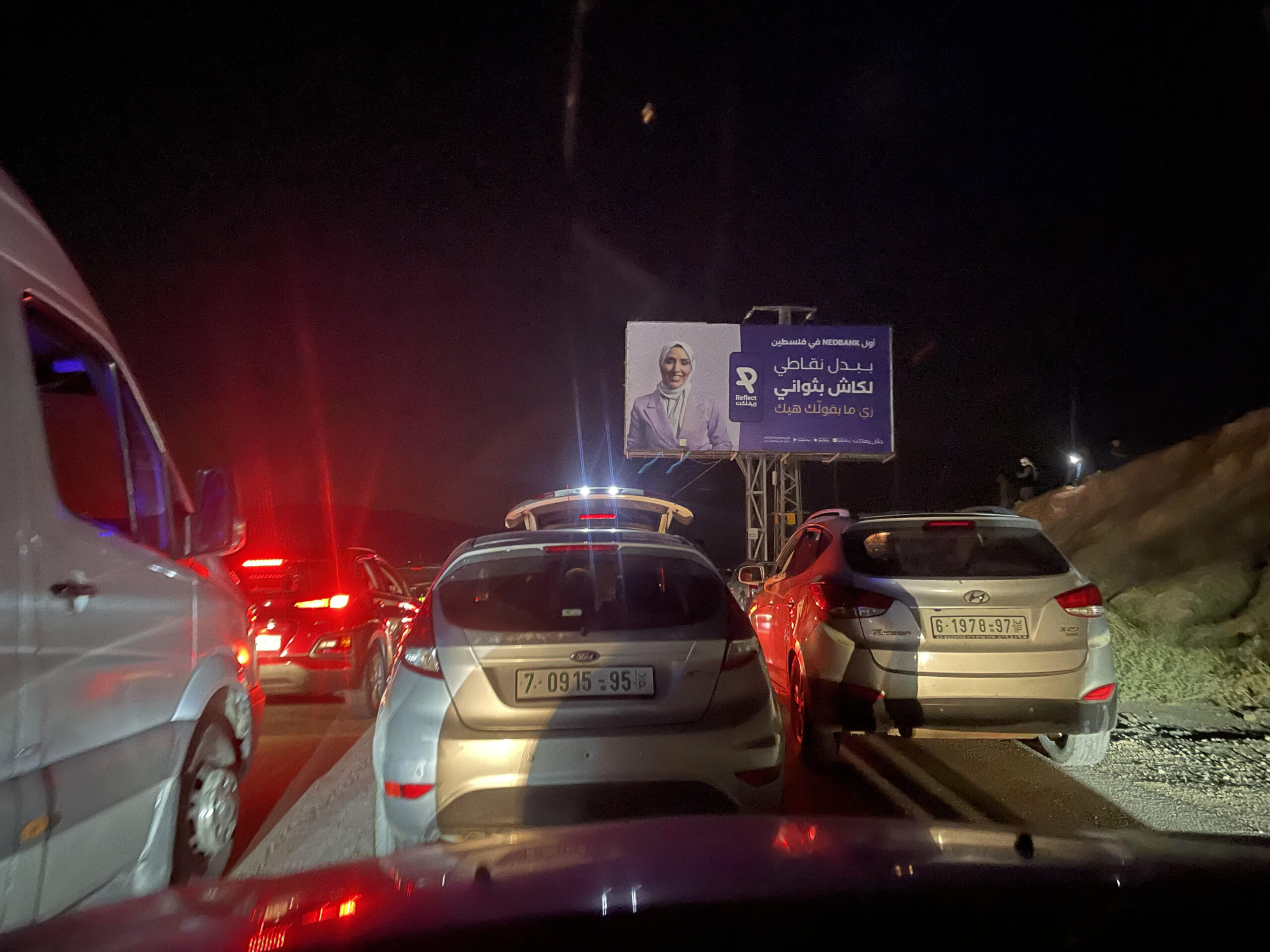
As we neared the checkpoint, I saw a long line of cars fighting to get closer to the soldiers, who were known to take 20-minute breaks between checking each car. In my head I whispered my mantra – they can steal your time but only you can surrender your inner peace – and made a U-turn, deciding on a 30-kilometer deter through a checkpoint that was usually unmanned.
I pulled the car over and ducked under the steering wheel to remove my shirt. “We’ll go a different way,” I told Forat. “Without soldiers until we reach Jerusalem.”
The sleeves of her shirt didn’t quite reach my wrists, but it mostly fit, and I could smell the sweat that her developing body was now producing in the unseasonably warm autumn weather. I looked down at her school logo, written in Arabic and English, and gave her a pocket mirror for her to inspect herself in my gray, capped-sleeve top.
She seemed mollified and even a little apologetic. She allowed me to listen to “American Pie” on the car audio system and didn’t even complain when I sang along. She sweetly asked if we could stop for pizza after seeing the doctor.
As we approached the second checkpoint, leading into Jerusalem, I put a shawl over her school shirt and then drove through with a smile to the soldiers, who barely glanced at me, profiling me as Jewish.
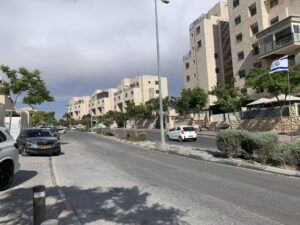
At the clinic, the doctor politely ignored the too-snug Arabic language school uniform I wore. Forat answered his questions in nods or shrugs, pretending not to understand or speak Hebrew. Like me at checkpoints, she’s also deciding who she needs to be.
After eating pizza, we drove back, approaching a checkpoint separating the Ramallah area from the Jewish settlement of Givat Ze’ev. I turned off the music and asked her to be quiet.
“Don’t you need a shawl to cover my shirt?” she asked.
“No,” I told her. “Here I really need to be Palestinian.”
I wondered how she understood the geography of the West Bank, where the right to travel depends on racial identity, and how that understanding would evolve as she continued her journey into young womanhood. As the child of an Israeli Jewish mother and a Palestinian father, she’s been code-switching since she first learned to speak.
I looked in the rearview mirror to see her admiring herself in the hand mirror. She’s old enough to look good in my soft, elegant, Italian-made shirt, and in a year or two it will fit her perfectly.


סיפור כל כך טיפוסי לגיל ההתבגרות וכל כך עצוב כאשר חושבים על הכיבוש הערור. אחולים למשרה החדשה – ולוואי ותצליחולהפסיק את ההתעללות באסירים.
חנה בר”ג
תודה רבה, חנה!
Comments in Hebrew don’t pass?
Of course they do! But it takes more than 60 seconds 🙂